Sign up for TPR Today, Texas Public Radio's newsletter that brings our top stories to your inbox each morning.
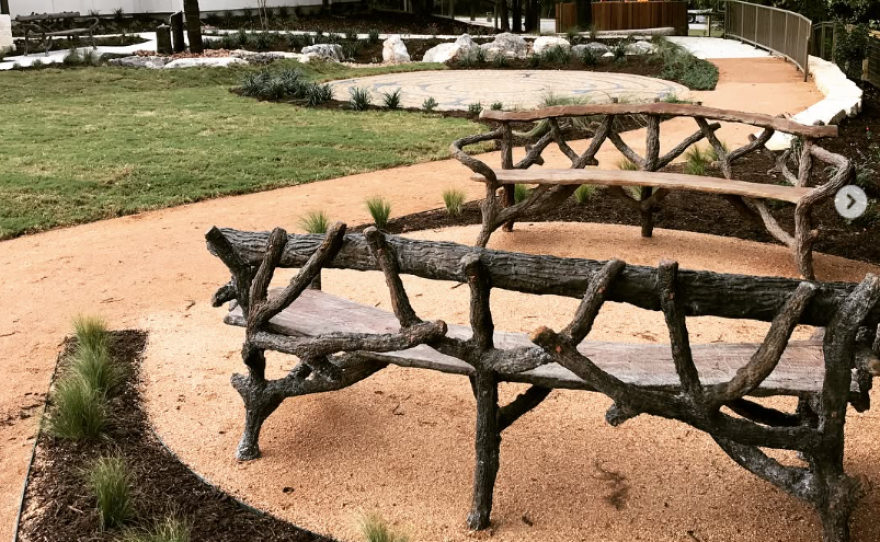
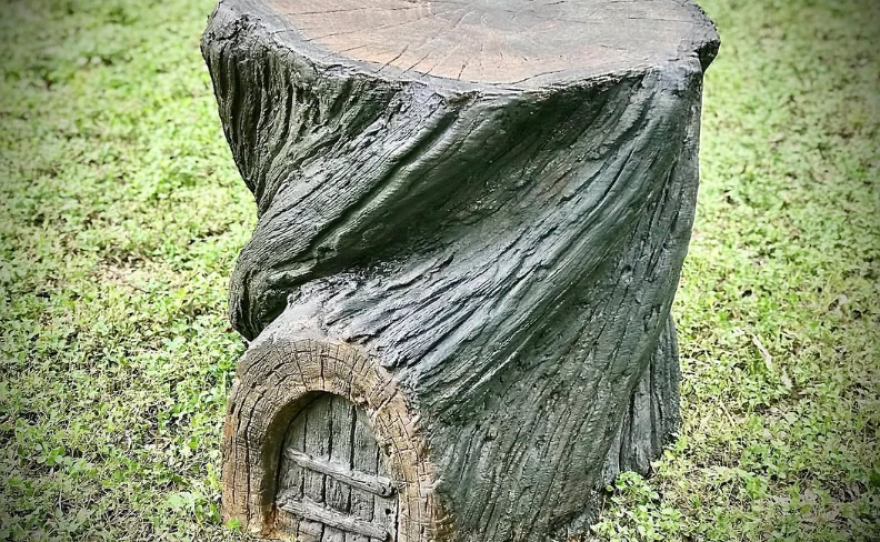
San Antonio is home to a distinctive art form called faux bois — concrete that’s been sculpted to look like wood. One of its best-known examples stands at the entrance to San Antonio’s Japanese Tea Garden, where a new addition is addressing a controversy dating all the way back to World War II.
Visitors enter the Japanese Tea Garden through a large, ornate gate that appears to be made of wood. It’s modeled after a traditional Japanese torii gate, which in Japan is used to mark the entrance to a sacred space.
“It's also a work of art,” says San Antonio Parks Foundation CEO Mary Jane Verette.
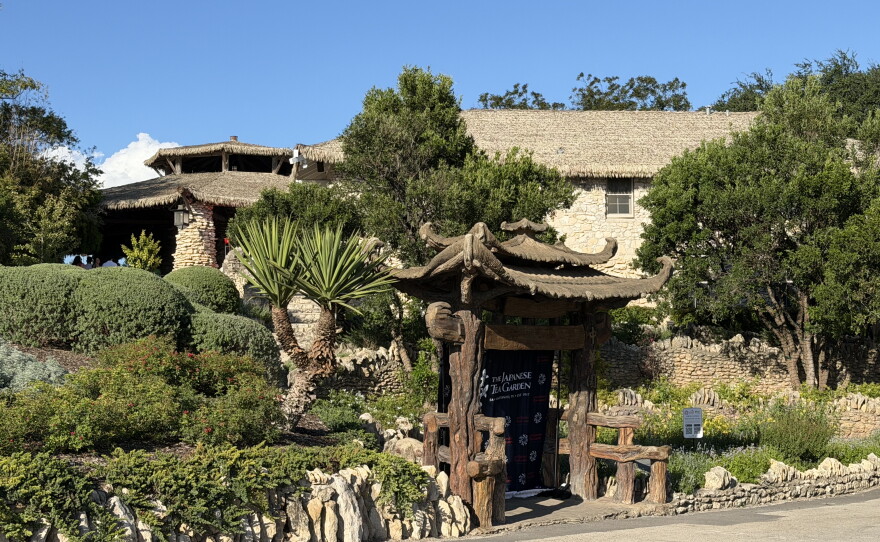
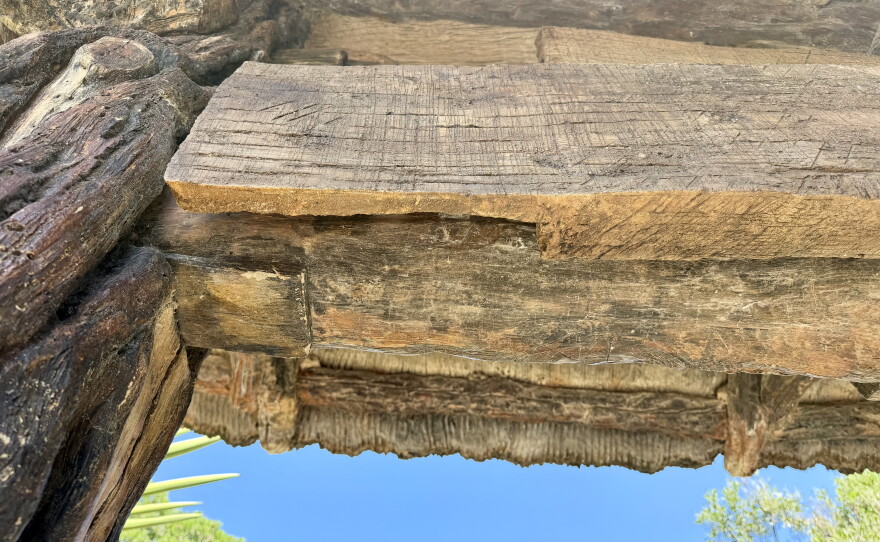
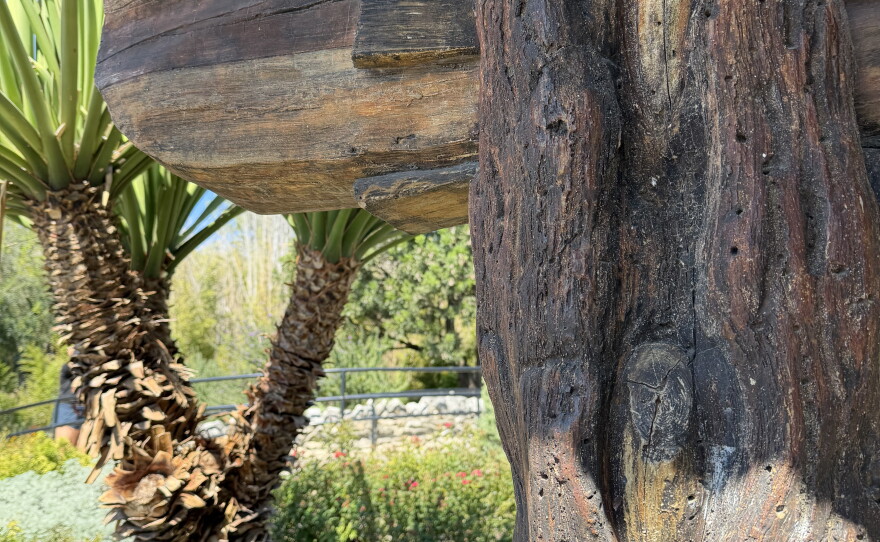
“When you look at the beautiful torii gate, which is very much a signature of this park, it's a massive piece of faux bois. It is beautiful,” Verette said.
Faux bois is French for "false wood." The technique was brought to San Antonio from Mexico in the 1920s by artist Dionicio Rodríguez, who became a master of the craft.
Rodríguez and fellow artist Maximo Cortés created the tea garden's entrance gate in 1942.
But the story behind its construction is a painful chapter in the garden's history.
Following Japan's attack on Pearl Harbor in December 1941, the city evicted the Japanese American Jingu family, which had lived at and operated a business out of the garden for years. A Chinese American family, the Wus, took over the business.
“The Wu family and the Jingu family were actually friends. I mean, they knew each other,” Verette said.


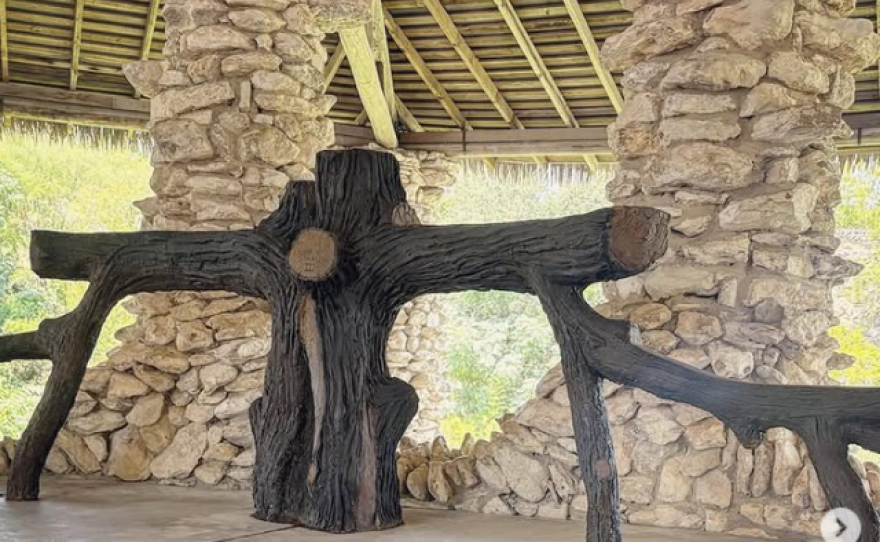
Amid widespread anti-Japanese sentiment during World War II, the city renamed the park the Chinese Tea Garden. The newly built entrance gate prominently displayed that name — a reminder of the discrimination that forced the Jingu family from the property.
“When it was originally built in 1942, it had the words 'Chinese Tea Garden' put on it,” Verette said. “We have to acknowledge the complex histories of our public parks, and then we have to move on and learn from it, and to grow from it.”
Members of the Jingu family eventually moved to California. In 1984, San Antonio restored the park's original name, the Japanese Tea Garden. But the gate still bore the words "Chinese Tea Garden."
Removing the lettering would mean altering a historic work of art. So how could the city reflect the garden's restored name while preserving the gate's history?
/ Courtesy photo
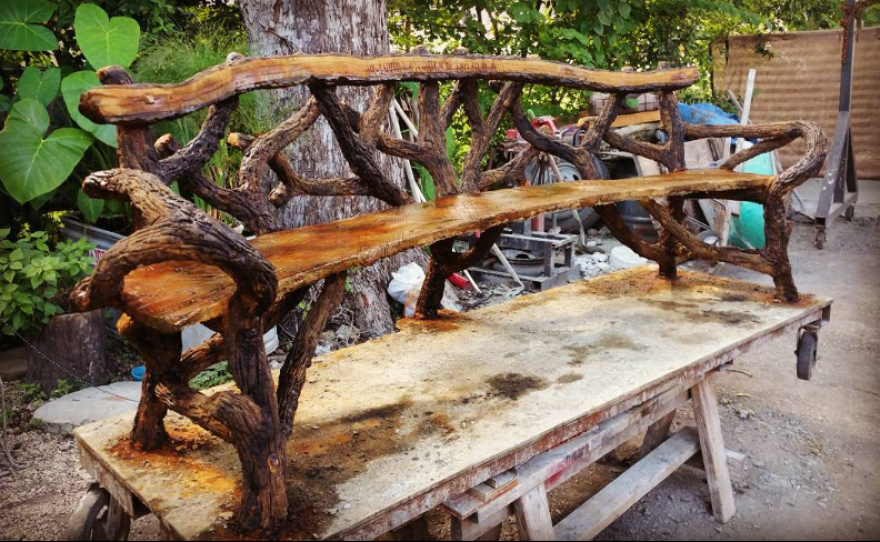
That's where artist René Romero came in.
“I do concrete pieces. I make them out of rebar and cement, and it's called faux bois. I learned it here in San Antonio 18 years ago,” he said.
Romero learned the technique from Carlos Cortés, a longtime San Antonio faux bois artist whose family has practiced the craft for generations. Romero worked alongside Cortés on The Grotto, a public artwork near the Pearl.
“Yes, I did a lot of work in there. That was the reason he hired me, because he was going to do the project,” Romero said.
At the Japanese Tea Garden, he faced a different faux bois challenge: how to conceal the old lettering without destroying it.
“I had to do like a cover for the name, the Chinese Tea Garden,” he said.
Romero created a concrete covering that looks like a wooden plank and fits over the words "Chinese Tea Garden." While the original lettering remains intact, it now is hidden from view.


Verette says preserving those words was important.
“I don't think we would ever want to take those letters down anyway, because they are part of the piece of art,” she said.
The solution preserves the original artwork while changing what visitors can actually see at the entrance.
“I feel like the solution that we came up with, with the new piece of faux bois, really is the best thing for the good of the whole,” she said.